
What is eTIMS in Kenya? Complete Guide to the KRA eTIMS System (2026)
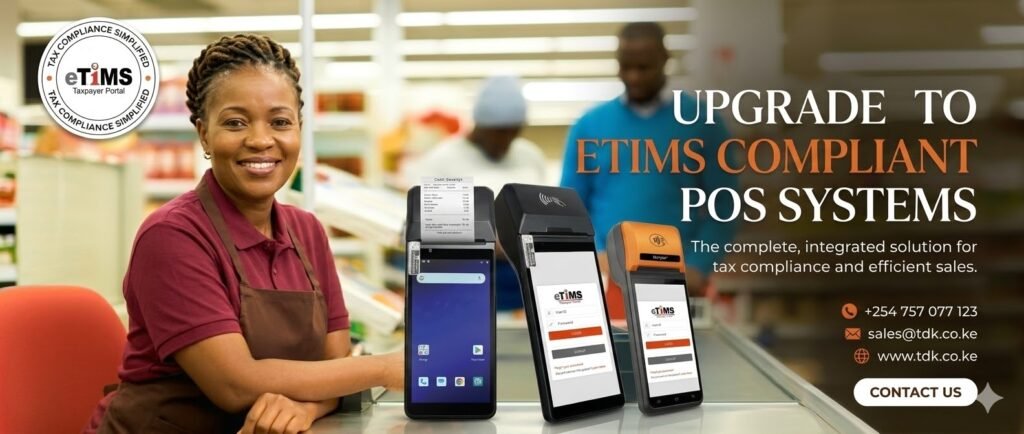
Businesses in Kenya are now required to comply with the Kenya Revenue Authority (KRA) electronic invoicing regulations through the electronic Tax Invoice Management System (eTIMS).
If you run a shop, supermarket, pharmacy, hardware store, or service business, understanding eTIMS is essential for tax compliance, accurate invoicing, and proper business record keeping.
This guide explains what eTIMS is, who must use it, how to register, and how it integrates with POS systems in Kenya.
What is eTIMS?
eTIMS (electronic Tax Invoice Management System) is a digital platform introduced by KRA that allows businesses to generate and transmit electronic tax invoices in real time.
The system enables businesses to issue compliant invoices while automatically reporting transaction details to the tax authority.
eTIMS can be accessed on several devices including:
- Desktop computers
- Laptops
- Android smartphones
- Tablets
- Personal Digital Assistants (PDAs)
This flexibility allows businesses across Kenya—from small retail shops to large enterprises—to comply with KRA regulations.
Who Should Use eTIMS in Kenya?
According to the Kenya Revenue Authority, all persons engaged in business must onboard eTIMS and issue electronic tax invoices.
This includes:
- Retail shops
- Supermarkets
- Restaurants
- Pharmacies
- Wholesalers
- Hardware stores
- Service providers
- Online businesses
Whether your business is large or small, issuing electronic invoices through eTIMS is now part of standard tax compliance in Kenya.
Why eTIMS Is Required Even for Non-VAT Businesses
Many business owners believe eTIMS only applies to VAT registered businesses, but this is not correct.
The law requires that business expenses must be supported by an electronic tax invoice for them to be claimed.
This means:
- VAT registered businesses must issue eTIMS invoices
- Non-VAT businesses must also issue electronic invoices
Without an eTIMS invoice, business expense claims may not be accepted during tax filing.
Benefits of the eTIMS System for Businesses
Using eTIMS offers several advantages for Kenyan businesses.
- Lower Compliance Costs
The system helps businesses manage tax records electronically, reducing paperwork and manual accounting processes.
- Accessible on Multiple Devices
eTIMS works on:
- Windows computers
- Android smartphones
- Tablets
- PDAs
This allows businesses to run the system from almost any device.
- Built-In Stock Management
The eTIMS stock module allows businesses to:
- Track inventory
- Monitor stock movement
- Maintain accurate records
- Secure Invoice Records
All issued invoices are stored in the taxpayer portal, ensuring proper documentation.
- Simplified Tax Filing
Businesses can submit returns more easily because invoices are already recorded digitally.
eTIMS Solutions Available in Kenya
KRA offers several eTIMS solutions depending on the type of business.
- Online Portal
The eTIMS online portal is designed mainly for service-based businesses that do not sell physical goods.
Examples include:
- Consultants
- Professionals
- Freelancers
- eTIMS Client Software
The eTIMS client is downloadable software suitable for businesses selling goods or a mix of goods and services.
Key features include:
- Multi-branch support
- Multiple cashier points
- Inventory tracking
This solution works well for:
- Retail shops
- Supermarkets
- Pharmacies
- Hardware stores
- Virtual Sales Control Unit (VSCU)
The VSCU solution enables system-to-system integration between business software and eTIMS.
It is designed for businesses with:
- Large transaction volumes
- Bulk invoicing
- ERP systems
- Online Sales Control Unit (OSCU)
The OSCU solution also allows integration with existing invoicing systems, especially online invoicing platforms.
Where Can eTIMS Be Installed?
eTIMS can be installed on:
- Windows computers
- Laptops
- Android smartphones
- Tablets
- PDAs
This flexibility allows businesses to integrate eTIMS into POS systems, billing software, and accounting platforms.
How to Register for eTIMS in Kenya
Businesses can onboard eTIMS through the official portal.
Step 1: Sign Up
Visit the eTIMS taxpayer portal and register using your KRA PIN.
Step 2: OTP Verification
A one-time password will be sent to the phone number registered on iTax.
Step 3: Create Your Password
Create a password to complete the sign-up process.
Step 4: Log In
Access the portal using your KRA PIN and password.
Step 5: Choose eTIMS Solution
Select the preferred eTIMS solution such as:
- eTIMS Client
- Online Portal
- VSCU
- OSCU
Step 6: Upload Required Documents
Required documents include:
- National ID of the business owner or director
- Completed eTIMS Acknowledgement & Commitment Form
Step 7: Submit Application
Submit the request for verification.
What Happens After eTIMS Registration?
After submitting the application:
- A KRA officer verifies the application
- The eTIMS system is approved
- The software can then be installed and configured
Businesses may:
- Install the system themselves using guides
- Visit a KRA office
- Use a certified eTIMS integrator
eTIMS System Integration with POS Systems
Many businesses prefer to integrate eTIMS with their Point of Sale (POS) systems.
This allows:
- Automatic invoice generation
- Real-time KRA compliance
- Inventory management
- Faster sales processing
For retail businesses, integrating eTIMS with a POS system provides a complete sales and compliance solution.
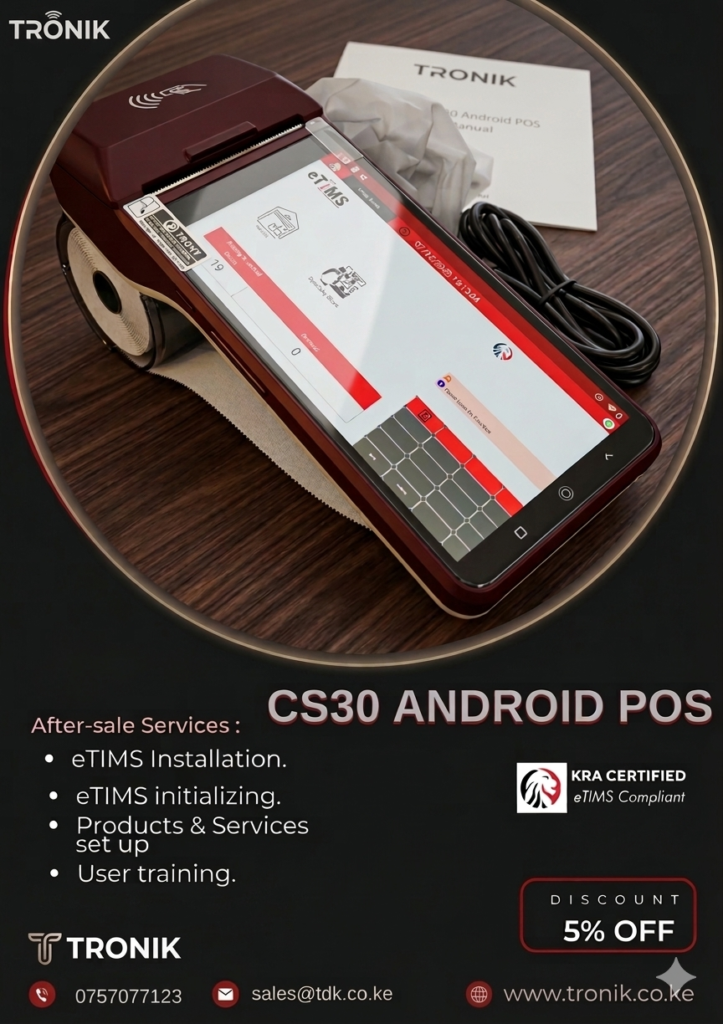
Get a Ready-to-Use eTIMS POS System in Kenya
If you want a ready-to-use POS system that is fully eTIMS compliant, professional installation can save time and prevent configuration errors.
A modern POS system can help your business:
- Issue KRA-compliant electronic invoices
- Track inventory automatically
- Manage multiple tills
- Generate sales reports
- Improve tax compliance
This is especially useful for shops, supermarkets, pharmacies, and retail businesses across Kenya.